
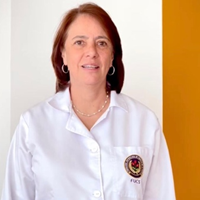
Marcela Gomez-Suarez
Fundacion Universitaria de Ciencias de la Salud, Colombia
Abstract Title: Co-creation of a Public Engagement with Science Strategy for HPV Vaccination and Cervical Cancer Prevention in an Urban School Community
Biography:
Dr. Marcela Gómez-Suarez, MD, MSc, PhD, is the Vice-Rector for Research at Fundación Universitaria de Ciencias de la Salud (FUCS) in Bogotá, Colombia. She is a physician and researcher with expertise in epidemiology, health equity, public health, and economic analysis. With extensive experience in teaching research methodology, epidemiology, and public health at both undergraduate and postgraduate levels, she also serves as a thesis advisor for Master’s and PhD students. Dr. Gómez-Suarez is an active peer reviewer for academic journals and is recognized for her ability to lead interdisciplinary academic discussions, offering respectful and constructive feedback to support experiential learning and professional development.
Research Interest:
Cervical cancer remains a major public health challenge globally, despite the availability of effective preventive measures such as vaccination against the human papillomavirus (HPV). In Colombia, HPV vaccination coverage remains well below the World Health Organization’s elimination targets, largely due to misinformation, distrust, and weak alignment between scientific communication and community realities. This study describes the implementation of a Public Engagement with Science (PES) strategy aimed at co-creating a culturally relevant communication tool to promote informed HPV vaccination within an urban school community in Bogotá.
A mixed sequential design was applied. The quantitative phase consisted of Knowledge, Attitudes and Practices (KAP) surveys administered to students, parents/caregivers, and teachers to identify baseline knowledge gaps and perceived barriers. The qualitative phase involved participatory dialogue sessions, interactive activities, and reflective workshops designed to foster bidirectional knowledge exchange, critical reflection, and collaborative design of prevention messages.
Results revealed substantial knowledge gaps among students, with over one-third unable to correctly define HPV and more than 80% unaware of HPV-related diseases. Parents and caregivers reported high levels of knowledge and willingness to vaccinate; however, actual vaccination coverage among their children remained low, evidencing a persistent intention–behavior gap. Qualitative findings highlighted widespread confusion between HPV and other infections, the influence of social media misinformation, and the central role of peer networks in shaping health perceptions, despite high trust in health professionals.
The Public Engagement with Science approach enabled community members to move beyond passive information reception toward active participation in the co-creation of prevention strategies. The resulting prototype emphasizes accessible language, interactive formats, and relatable narratives. This experience demonstrates the value of PES frameworks for strengthening culturally grounded communication and advancing equitable cervical cancer prevention efforts in low-coverage settings.